IX Broker Complaints Review – Withdrawal Risk and Broker Warning
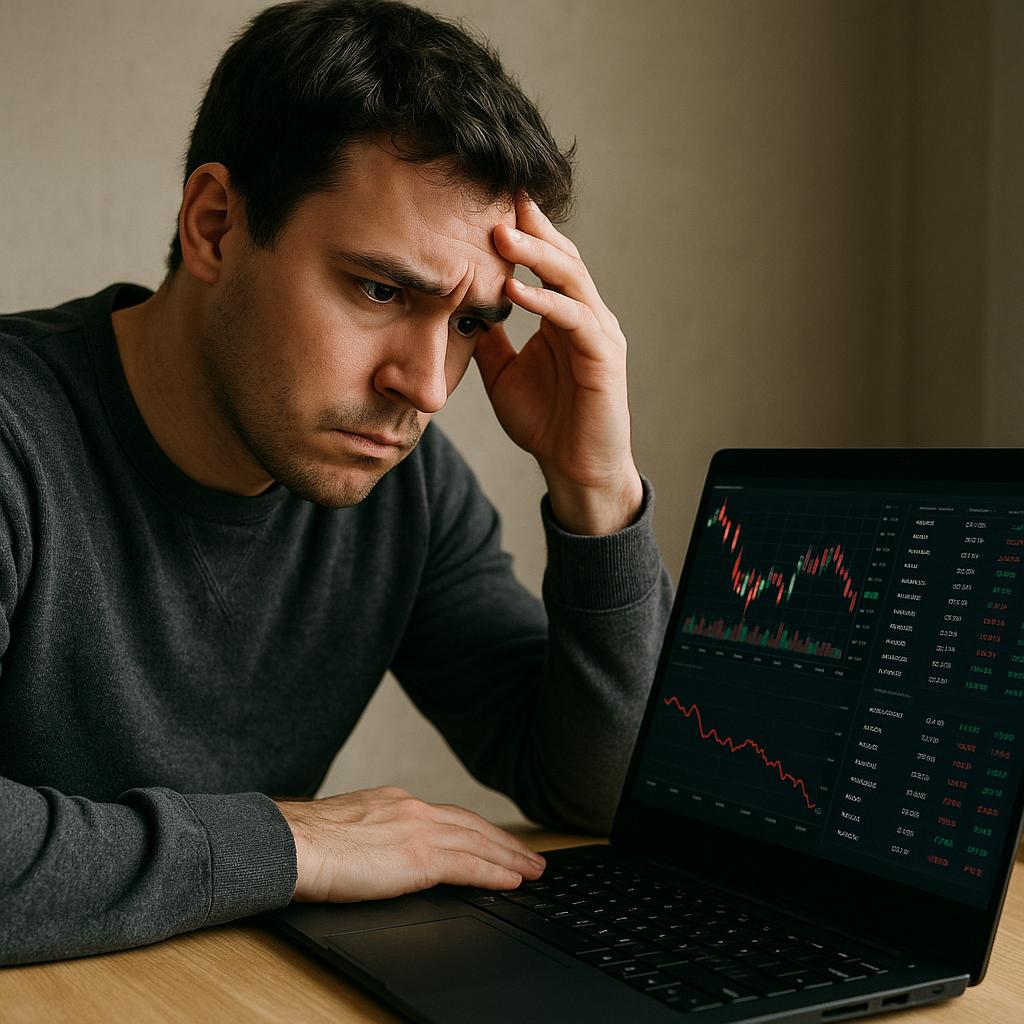
There are thousands of trading websites online, but not all of them are legitimate brokers.
If you are reading this IX Broker review, you are probably trying to determine whether
IX Broker is safe or a scam.
That distinction matters because once funds are sent to an unreliable broker, recovery can become
extremely difficult. The site ixbroker.com raises several concerns that should make traders
pause before registering or depositing.
Our goal in this article is to explain those concerns clearly and practically.
Complaint Pattern Analysis
High-risk broker complaints often follow the same sequence: easy registration, a quick first deposit, friendly account-manager contact, visible account growth, pressure to deposit more, and then difficulty when the trader asks to withdraw funds.
For IX Broker, traders should pay special attention to any request for additional taxes, verification fees, insurance fees, or commissions before a withdrawal can be released. Those demands are common in fraudulent broker scenarios.
IX Broker Risk Score
Risk score: 69/100 – Caution Required. This score is based on the broker’s public risk profile, regulatory uncertainty, transparency concerns, withdrawal-risk patterns, and technical footprint indicators related to ixbroker.com.
| Review Type | Complaints & Withdrawal Risk |
| Website | ixbroker.com |
| Regulation Risk | 40/40 |
| Transparency Risk | 18/25 |
| Withdrawal Risk | 19/25 |
| Technical / Domain Risk | 9/20 |
IX Broker Evidence Overview
This page is not based only on marketing language found on the broker’s website. Our review focuses on verifiable risk areas: regulation, ownership transparency, domain footprint, withdrawal credibility, and behavior commonly associated with unsafe trading platforms.
| Broker Name | IX Broker |
| Broker Website | ixbroker.com |
| Review Focus | Regulation, withdrawals, transparency, and technical footprint |
| Last Internal Review Batch | 2026-04-05 |
Regulatory Checks for IX Broker
For a broker to be considered safer, its legal name and license number should be easy to verify in recognized financial-register databases. If those details are missing, vague, or difficult to match, traders should treat the broker as high risk.
| Authority | Review Finding |
|---|---|
| FCA – United Kingdom | No confirmed authorization found in this review template |
| ASIC – Australia | No confirmed authorization found in this review template |
| CySEC – European Union | No confirmed license found in this review template |
| CFTC / NFA – United States | No confirmed registration found in this review template |
Complaint Pattern Analysis
High-risk broker complaints often follow the same sequence: easy registration, a quick first deposit, friendly account-manager contact, visible account growth, pressure to deposit more, and then difficulty when the trader asks to withdraw funds.
For IX Broker, traders should pay special attention to any request for additional taxes, verification fees, insurance fees, or commissions before a withdrawal can be released. Those demands are common in fraudulent broker scenarios.
Technical Review of ixbroker.com
Technical review is especially useful in scam-broker analysis because it looks past sales language and into how the
site is actually positioned online.
WHOIS Ownership Signal
If the domain uses privacy shielding, traders should note that the site is easier to operate anonymously and harder
to connect to a clearly accountable operator.
IX Broker Review – Key Warning Signs
Traders should pay attention to the following warning signs.
1. Regulation appears weak or absent
This is the foundation of the risk profile.
2. Communication may be sales-heavy
If every conversation leads to “deposit more,” the broker’s incentives are obvious.
3. Profit claims may be exaggerated
Markets do not work the way scam brokers describe them.
4. The platform lacks comforting transparency
Opacity and financial trust do not belong together.
IX Broker Withdrawal Problems
Many traders do not realize that fake-profit displays and withdrawal problems are often linked. Visible
account gains can be used to encourage trust, but if those gains cannot actually be withdrawn, they are
little more than numbers on a screen.
That is why withdrawal risk should be treated as one of the most important parts of any IX Broker review.
Website and Technical Footprint
The domain ixbroker.com is part of the broker’s trust profile. Technical signals do not prove fraud by themselves, but they are useful when combined with weak licensing, unclear company information, or withdrawal concerns.
- Does the broker clearly identify the legal company behind the website?
- Does the website provide a license number that can be independently verified?
- Does the broker use generic trading-platform language without clear ownership details?
- Does the website appear to be part of a wider cluster of similar broker brands?
When these answers are unclear, IX Broker should be evaluated with additional caution.
How the IX Broker Scam May Work
The classic broker-scam progression is simple: contact, deposit, confidence, escalation, and obstruction.
First the user is told that the opportunity is strong. Then a low first deposit is suggested. Next, account
performance appears encouraging. After that, the broker pushes for larger payments. Finally, withdrawal becomes
difficult or conditional.
Clone-Site and Network Risk
Some broker websites are launched as part of wider networks where the same design, backend structure, scripts, or sales operation is reused across multiple domains. If ixbroker.com shares infrastructure or content patterns with other suspicious brands, that would increase the risk profile.
This is why we treat IX Broker not only as a standalone website, but also as a possible part of a broader high-risk broker ecosystem.
Why Unregulated Brokers Are Especially Dangerous
Unregulated brokers present a different class of risk than regulated brokers with ordinary service problems. When a broker
operates outside major supervisory frameworks, the client is often exposed not only to market losses, but also to direct
counterparty risk. In practical terms, that means the real threat may be the broker itself rather than the trades placed on the platform.
Without clear oversight, there is less pressure on the company to handle funds fairly, process withdrawals promptly,
maintain honest disclosures, or keep sales behavior within reasonable limits. If a dispute arises, the client may have no strong
external body to turn to.
Fake Positive Reviews
When traders search online for IX Broker legit, they may encounter positive reviews about the broker.
However, not all positive content should be taken at face value.
Fraudulent brokers often invest in reputation management in order to appear safer than they really are. Positive
testimonials may be paid for, copied, posted on low-trust sites, or written in language that feels promotional
rather than authentic.
Why Unregulated Brokers Are Especially Dangerous
Unregulated brokers present a different class of risk than regulated brokers with ordinary service problems. When a broker
operates outside major supervisory frameworks, the client is often exposed not only to market losses, but also to direct
counterparty risk. In practical terms, that means the real threat may be the broker itself rather than the trades placed on the platform.
Without clear oversight, there is less pressure on the company to handle funds fairly, process withdrawals promptly,
maintain honest disclosures, or keep sales behavior within reasonable limits. If a dispute arises, the client may have no strong
external body to turn to.
Managed Accounts and Trading Losses
Managed-account arrangements may sound convenient, but they also create another layer of dependency on the broker.
The client is no longer just trusting the platform — the client is trusting the platform to make decisions with
the deposited capital.
What To Do If You Deposited With IX Broker
If you now suspect fraud, the priority is to stop the damage from growing.
1. Stop Sending More Money
Do not pay extra fees to “unlock” withdrawals or complete supposed compliance steps unless your own bank or trusted
authority confirms they are legitimate.
2. Speak to Your Bank Quickly
The sooner the payment issue is raised, the better your chances may be.
3. Preserve All Records
Documentation may support disputes, complaints, and internal fraud reviews.
Safer Alternatives – Choosing a Legit Broker
Before opening an account with any broker, traders should verify that the company is properly regulated. A legitimate
broker should provide a clear legal identity, a valid regulatory license, transparent business information, understandable
withdrawal rules, and support that does not depend on pressure tactics.
Regulation does not guarantee profits, but it does create a framework of accountability that scam brokers usually avoid.
Traders should always prefer well-supervised firms over anonymous or weakly documented platforms.
FAQ – IX Broker Review
Why are people searching for “IX Broker scam”?
Usually because they are concerned about licensing, withdrawals, support behavior, or the overall trustworthiness
of the platform.
Is ixbroker.com a safe broker website?
Based on the weaknesses discussed in this review, traders should not assume the domain is safe without stronger proof
of regulation and transparency.
What is the biggest risk here?
The combination of weak supervision and payout risk. That combination can become very costly once money is deposited.
Should beginners avoid unregulated brokers?
Yes. Beginners are often more vulnerable to persuasive sales tactics and may have fewer tools to detect manipulation early.
Final Verdict – IX Broker Review
After reviewing the available information, we identified several concerns that should not be ignored:
- absence of verified regulatory licensing
- aggressive marketing and deposit pressure
- high withdrawal risk
- weak transparency and troubling technical signs
For these reasons, traders should treat IX Broker with extreme caution. If you are researching whether
IX Broker scam allegations are credible, the safest conclusion is that this broker belongs in the high-risk
category and should be avoided whenever possible.
Final Safety Note
IX Broker shows multiple strong indicators of being a high-risk broker and should be approached with extreme caution.
If you are asking “is IX Broker scam”, the safest practical answer is: do not deposit funds unless the broker can provide strong, independently verifiable proof of regulation and ownership.
If you got scammed by IX Broker, please report this to us – Report a Scam Forex Broker or write to us at [email protected].